
Police to Issue Citations to Driverless Cars in Calif.
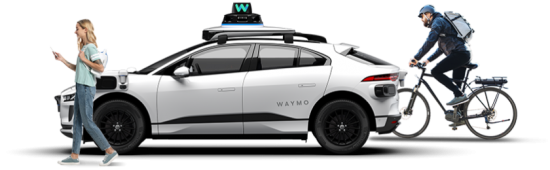
California has passed Assembly Bill 1777 to establish a framework for law enforcement to cite driverless, autonomous cars for traffic offenses. Effective July 1, 2026, the new law will permit peace officers across the state to issue a formal “notice of autonomous vehicle noncompliance” when an automated vehicle commits a moving violation or violates a local traffic ordinance while its self-driving technology is engaged.
Under the legislation, officers who observe a driverless vehicle violating the California Vehicle Code will issue a noncompliance notice directly to the vehicle’s manufacturer, bypassing the traditional process of issuing a ticket to a driver.
Manufacturers are then legally required to transmit the notice to the California Department of Motor Vehicles within 72 hours of its issuance. The system was designed to resolve questions for police departments about whether they had the authority to issue a citation for a moving violation committed by an autonomous vehicle and to whom that citation should be directed.
Assemblymember Phil Ting, who authored the bill, introduced the legislation to address immediate public safety issues that have emerged during the testing and deployment of robotaxis in California. Ting noted that while the autonomous vehicle industry is still emerging and could position California as a leader in the field, the complete absence of a human driver necessitates strict accountability.
The author stated that the legislation treats driverless cars as if there were a real person behind the wheel, ensuring that municipal authorities can communicate with the operating companies and that incident data remains transparent. Without slowing down industrial innovation, Ting said the bill would achieve a much higher safety standard for the public sharing the road with the technology.
The legislation aims to hold driverless cars accountable and allow them to receive citations, since only human drivers can receive tickets.
This issue gained attention after a June 2024 incident in Phoenix, where an officer pulled over a driverless Waymo vehicle for running a red light. The officer noted in his report that he couldn’t issue a citation to a computer. Waymo attributed the incident to unclear construction signage.
In January 2026, a Waymo autonomous vehicle struck a child near a Santa Monica elementary school during morning drop-off. The company reported that the child suddenly ran into the street from behind a parked SUV, causing the Waymo vehicle to brake from 17 mph to under 6 mph before impact.
The child stood up and walked away, and the vehicle stayed until law enforcement arrived. The National Highway Traffic Safety Administration launched an investigation to assess whether the autonomous system exercised adequate caution in a school zone.
In incidents similar to the Waymo collision with a child, the legislation mandates that vehicles have a data recording mechanism that captures sensor data for at least 30 seconds before collisions and stores it for 3 years for investigation.
The new law also mandates communication and emergency override requirements for autonomous vehicle manufacturers. Companies must provide a toll-free emergency response line for remote operators to respond to public safety officials within 30 seconds and equip vehicles with two-way communication devices. Manufacturers must also train local agencies to use accessible override systems in emergencies.
Regarding emergencies, companies must allow for an emergency geofencing override. If emergency responders issue an emergency geofencing message, manufacturers must direct their fleet to avoid the area within two minutes.
The implementation of the citation system relies on future DMV regulations, estimated to cost around $115,000 to develop. Current enforcement only allows suspending operational permits, prompting discussions of intermediate penalties such as fleet-size restrictions or financial fines.
The law focuses solely on autonomous vehicles without a human driver, defined as those equipped with Level 3, 4, or 5 technology. It does not cover small autonomous delivery robots or commercial trucks weighing over 10,001 pounds, which will have separate regulations developed by the DMV in collaboration with the California Highway Patrol.
For any inquiries or further information, please contact Jose Cervantes at JoseC.Press@pm.me
Category:
- Log in to post comments
Featured Video

Beachcomber
Copyright 2026 Beeler & Associates.
All rights reserved. Contents may not be reproduced or transmitted – by any means – without publisher's written permission.

